Posts

. Aveleda´s House is a villa designed to accommodate the light as a source of inner experience of housing. The basic idea of the project, parts from the concept of being located near by the old Roman city of “Bracara Augustae”, where the ancient Roman houses, the Domus, were built around an internal square. Hence all the subtlety of the house is achieved with a careful distribution. In other hand, it was searchable to provide all 6 senses of life. “We tried to take the most of the land to create a connection with the interior of the building, leaving a view of the valley and the square that exists between the two bodies housing”, highlights Manuel Ribeiro, architect and author of the project responsible for its implementation. The main body which houses the social functions of the house is situated at the same elevation of the square, assuming the sloping ground with the Hall higher, comparatively to the social part and creating a view of all from this; the social area involves open spaces, living and dining room without doors to the kitchen, and bathroom service is disguised within. Down below the architect created a space for a gym and an office, supplied by the natural slope of the terrain. The private area with 4 bedrooms (1 suite and 3 rooms) and a large bathroom facility support is at the elevation of the entrance hall, raised highly in comparison of the external square, without losing the visual field. The suite room is also a closet, and a large bathroom, where there is a division between the uses (bath, sanitary and sinks). On the square that is outside, we can find the pool that reminds us the Roman “compluvium” of a “Domus”, centered on between two areas of housing. Uniting all construction towards the valley and enhanced with the Sun´s circuit along with the glass façade. The engine room, the locker room and a support kitchen area in a under elevation of the square, as a support for the outdoor activities. “The plasticity of the object HOUSE (purpose built) will always be overridden by the phenomenological aspect, giving identity and character to the building and so, it’s able now to provide a center of life, functional and familiar at the same time that explores the pleasure of landscapes, spacious zones and materials. This will not be only a “home”, but always a Domus. All the project intends to explore the human being as well as it senses: touch, sight, smell, hearing, taste and passion. These are aspects that never been neglected. On the contrary, they are always present”, he conclud

Image

Located only 90 minutes from New York City, Southampton is easily accessible by luxury bus liner, the Long Island Railroad and Expressway and Connecticut ferries. Southampton real estate offers easy access to the historic village, with many fine restaurants and boutiques and home to world-class golf facilities such as the Shinnecock Golf Club and the National Golf Links. An active cultural roster includes events sponsored by the Parrish Art Museum, Southampton Hospital and the Southampton Cultural Center. Summer highlights include local fireworks displays, a rich list of well-planned social events and open-air concerts at Lake Agawam. Ocean beaches are among the best in the world, while deep open bay waters are ideal for competitive sailing.

Image

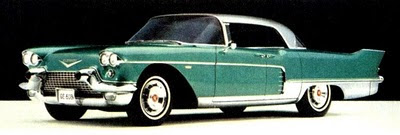
The 1957 and 1958 Cadillac Eldorado Brougham was the most expensive American car at the time. It was a styling masterpiece and a technological wonder. Virtually every comfort and luxury available at the time was included at no charge. These limited production cars weren't intended to make a profit for Cadillac, they were a declaration of Cadillac's superiority in the luxury car market. The Eldorado Brougham was Cadillac's supreme achievement in the late fifties and by virtue of their rarity, each one has been collectible from the moment it was built. There was no better statement of success in its day than arriving in a Cadillac Eldorado Brougham. Identification of the Eldorado Brougham is similar to that of other Cadillac vehicles of the era. A Body Name Plate is mounted in the engine compartment on the driver's side, directly behind the brake booster and on top of the heater plenum (near the heater and fresh air duct). The code numbers provided on this plate identify many details about the car, including the body number of the car, interior trim code, and exterior paint color codes. We will first address the trim code. The 1957-1958 Eldorado Brougham trim code is comprised of a four digit number. There were 44 different selections of trim and color in all. The first three digits designate the interior trim code and identify the color and upholstery material used. The fourth digit represents the type of carpeting used. There were two upholstery materials used on the Eldorado Brougham, a beautiful cloth fabric and genuine leather

Image

CADILLAC'S

Image

ART

Image

ART

Image
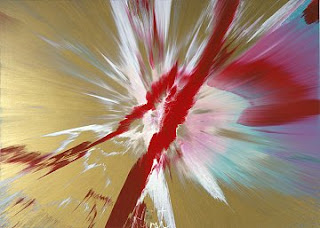
Damien Hirst was born in Bristol, England in 1965. While still a student at Goldsmith's College in 1988, he curated the now renowned student exhibition, Freeze, held in east London. In this exhibition, Hirst brought together a group of young artists who would come to define cutting-edge contemporary art in the 1990s. In 1991, he had his first solo exhibition at the Woodstock Street Gallery, entitled In and Out of Love, in which he filled the gallery with hundreds of live tropical butterflies, some of which were hatched from the monochrome canvases that hung the walls. In 1992, he was part of the ground breaking Young British Artists exhibition at the Saatchi Gallery. In this show, he exhibited his now famous Physical Impossibility of Death in the Mind of Someone Living, a tiger shark in a glass tank of formaldehyde. That same year he was nominated for the prestigious Tate Gallery Turner Prize, and later won that coveted award in 1995. Hirst's best known works are his paintin...

1976 Rolls Royce Camargue Production: 531 from 1975-1986 Price new: ?ú 32,198 Rear-wheel-drive 6.75 litre V8 engine 3-speed automatic transmission 120.1 inch wheelbase / 203.5 inch length 5,172 pound weight 15 inch tires Top speed of 118 mph Designed by Pininfarina The Camargue would later by imported to the United States. It was built on the Silver Shadow platform and was the first Rolls model to have split-level air conditioning. The 2-door coupe was also unique with its squared off rear styling (similar to the Fiat 130 Coupe, also designed by Pininfarina and introduced in the same period). The front grille was unique to Rolls Royce in that it was slanted inwards. The Camargue was more expensive than the Corniche and more rare. During its 11 year production, 146 cars would be officially imported to the United States. Final models in 1986 were 80th Anniversary models - 12 would be built - all in white. Swiss coachbuilder Sbarro modified one Camargue into a unique looking Hunting Car.

Image

Jackson Pollock

Image

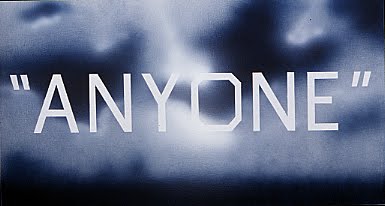
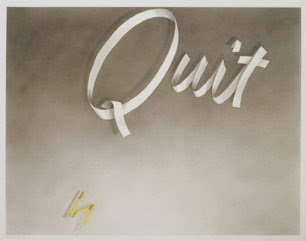
Born in 1937 in Omaha, Nebraska, Edward Ruscha moved to Oklahoma City in 1941 and to Los Angeles in 1956 to attend the Chouinard Art Institute. He had his first solo exhibition in 1963 at the Ferus Gallery in Los Angeles. At the start of the seventies, Ruscha began showing his work with the Leo Castelli in New York. He currently shows with the Gagosian Gallery in New York, Beverly Hills and London. Ruscha has consistently combined the cityscape of Los Angeles with vernacular language to communicate a particular urban experience. Encompassing photography, drawing, painting, and artist books, Ruscha's work holds the mirror up to the banality of urban life and give order to the barrage of mass media-fed images and information that confront us daily. Ruscha's early career as a graphic artist continues to strongly influence his aesthetic and thematic approach.

Image

STUBBS AND WOOTTON

Image

YSL

Image
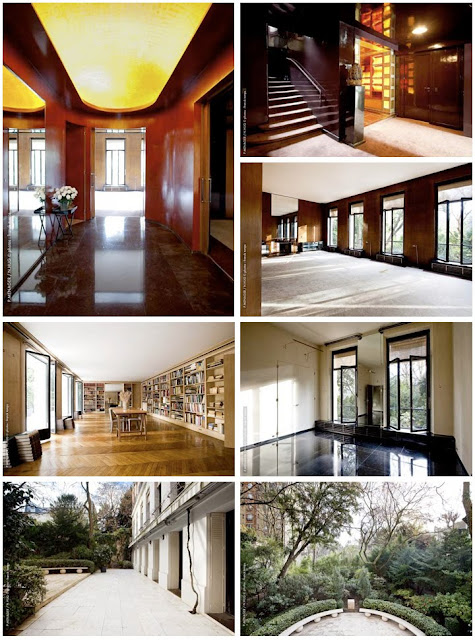
The sophisticated residence of Messieurs Laurent and   Bergé , which measures approximately 5,600 square feet, has a private entry on the 2 nd   floor and an elongated oval entrance hall with mottled black marble floors, red lacquered walls inspired by the color of Monsieur Laurent's signature fragrance Opium, and an arching,   uplit   gold leaf ceiling. The theatrical entry leads directly into the 750 square foot main salon that features 12.5' high ceilings, a fireplace with glitzy and   glammy   mirrored surround, wall to wall carpeting that Your Mama loathes, luscious and sleek,   marquetry -free oak paneling, and 5 gigantic windows that open to and overlook the apartment's gorgeous gardens. The formal dining room has a fireplace and overlooks the rear gardens while a music room has three tall windows that overlook the building's courtyard. Three of the apartment's four bedrooms are located on the second level and include a master suite bathed in...

This is no small feat children, because 778 Park Avenue, the super swanky Rosario Candela designed building in which the sprawling full floor unit is located, requires buyers purchase the apartment with cash. That's all cash kids, no mortgages allowed.

Image

Le Palais du Couchant $68,500,000 • 9577 Sunset Blvd • Beverly Hills The epitome of European elegance with over 36,000 square feet of exquisite designs with hand painted detailing & state of the art electronics. Commercial level systems, exceptional new construction on nearly two acres of unparalleled quality. Delicate hand carved imported limestone exterior, onyx marbles, marble columns, antique mirrors, exceptional French moldings with 24karat gilt, bronze beveled double paned windows & doors. Fabulous master suite with huge dressing areas, luxurious baths & separate sitting rooms. Tournament play tennis court, expansive pool pavilion entertaining area with beautiful gardens. Opulent two story circular entry with a magnificent skylight. An entertainer's paradise, extraordinary scale. No expense has been spared in this famed 3 level French Palladian residential estate

Image

Love is agony, isn't it? I've been involved with someone for quite some time now, but it's all so complicated. . . There is no hope.

Image

THE BEST..........!

Image
Angel of Beauty The Story of Dr. Erno Laszlo “Once upon a time,  in a  land of princess and palaces, of grand romances and glorious beauties, there lived a notorious not-so-beautiful princess.  Denied the fairy-tale happiness, she became a shadowy recluse at court, humiliated and tormented by her plainness, until the young Dr. Erno Laszlo was summoned.  The story of his “cure” marks the very first marriage of dermatology and cosmetology, of treatment and cosmetics, not unusual today, but revolutionary in the early part of this century.  And so the legend of Laszlo began.  One that would span two continents, as the Erno Laszlo Institute relocated from war-torn Budapest to Fifth Avenue in New York.  Royalty, society, and celebrities flocked to the exclusive inner sanctum of the Institute, to the doctor who could make them feel more beautiful than they ever had before.  Erno Laszlo has discovered, with great insight and understanding, the true s...

That simplicity has very little to do with the kind of pristine Minimalism that has often dominated the design scene in recent decades. When Biesenbach bought the Manhattan apartment in 2007—after seeing it listed in The New York Times online classifieds—he took out a few walls and refinished the dark wood floors, but he left most of the place untouched, not even bothering to repaint the living room walls. (You can still see faint outlines where the previous owner’s pictures hung.) Clearly it’s an approach that allows him a break from the countless aesthetic judgments that his day job requires. As MoMA’s chief curator of media, Biesenbach oversees the museum’s fast-growing collection of multimedia installations and video and performance pieces. (He co-organized last year’s Olafur Eliasson survey, curated the current Pipilotti Rist exhibit and is preparing upcoming shows of Marina Abramovic and Tehching Hsieh.) “Normally I have to make so many decisions about the tone of white and the tone of gray,” he says. “And should this be a half an inch higher, and to the left? So I actually think this space is about making no decisions.” Biesenbach doesn’t have a single painting or photograph in his apartment. He wonders whether people who live with static artworks look at them enough. The “ephemeral” pieces he generally favors—performance, video, film—tend to demand far more active engagement. On the floor of his living room Biesenbach has an old InFocus video projector, which he uses to display a movie or a video piece on the wall. (He’ll sometimes move the mattress from the bedroom to sit and watch.) Mostly, though, he likes to keep the projector turned off because it distracts from what he considers the apartment’s main attraction: the mesmerizingly cinematic view from the 340-square-foot terrace. “When I first walked out here, I said, ‘Wow, this is like a movie,’” says Biesenbach, pointing out his favorite elements of the hyperkinetic urban tableau: boats cruising the East and Hudson rivers, commercial jets on their way to and from the area’s three major airports, subway cars snaking out of a tunnel to cross the Williamsburg Bridge. On the ground, the teeming streets, sidewalks and handball courts are like the giant set of some deconstructed epic film that’s on permanent loop. The apartment is on the 18th floor—low enough to make Biesenbach feel almost a part of the action but high enough to afford some distance from it. From up here, he says, it sometimes seems as if you could see the curvature of the earth. “Of course you can’t,” says Biesenbach, “but it feels as if you can.” Biesenbach, who lives alone, spends most of his time on the terrace, where the sights of traffic jams and the sounds of police sirens conjure memories of Kojak and other American TV series that he grew up watching. “There is great sympathy for what you see, but you also feel very disconnected,” he says. “And you’re constantly hearing this sound, but it’s not really a feedback into reality—it’s a feedback into fiction.”

Image

Vogue editor Anna Wintour has issued a statement on the passing of Alexander McQueen: "We are devastated to learn of the death of Alexander McQueen, one of the greatest talents of his generation. He brought a uniquely British sense of daring and aesthetic fearlessness to the global stage of fashion. In such a short career, Alexander McQueen’s influence was astonishing — from street style, to music culture and the world’s museums. His passing marks an insurmountable loss

Image